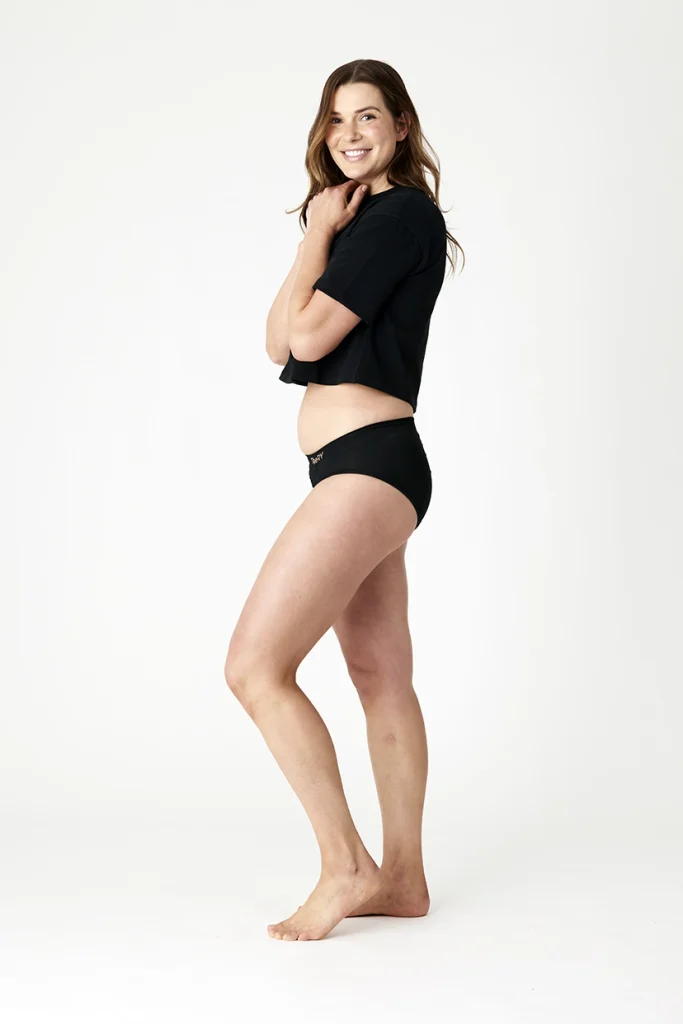
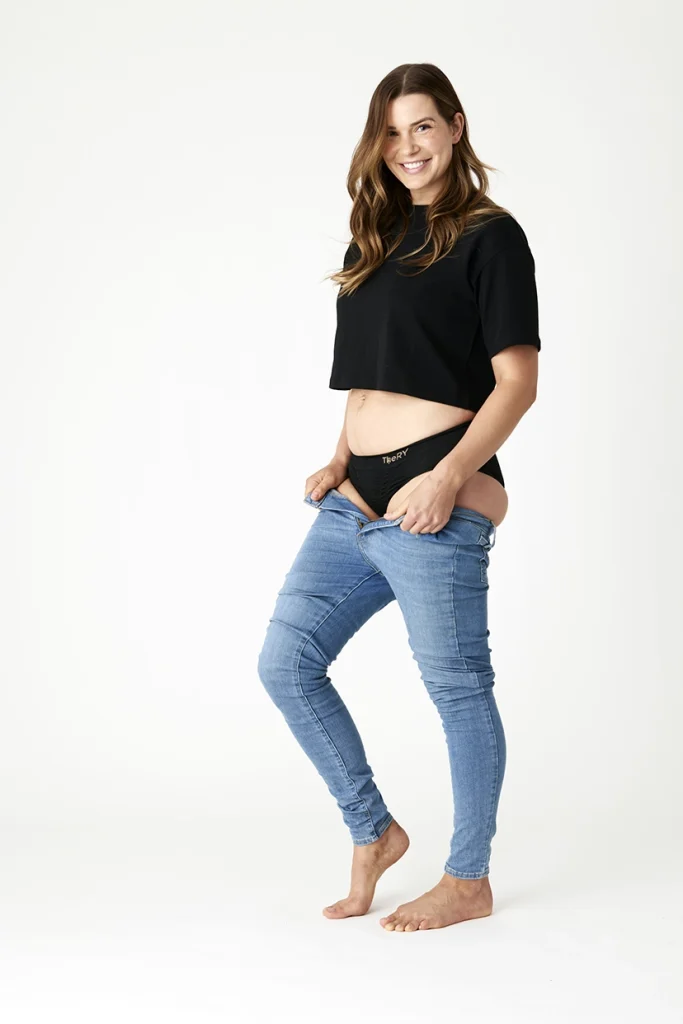
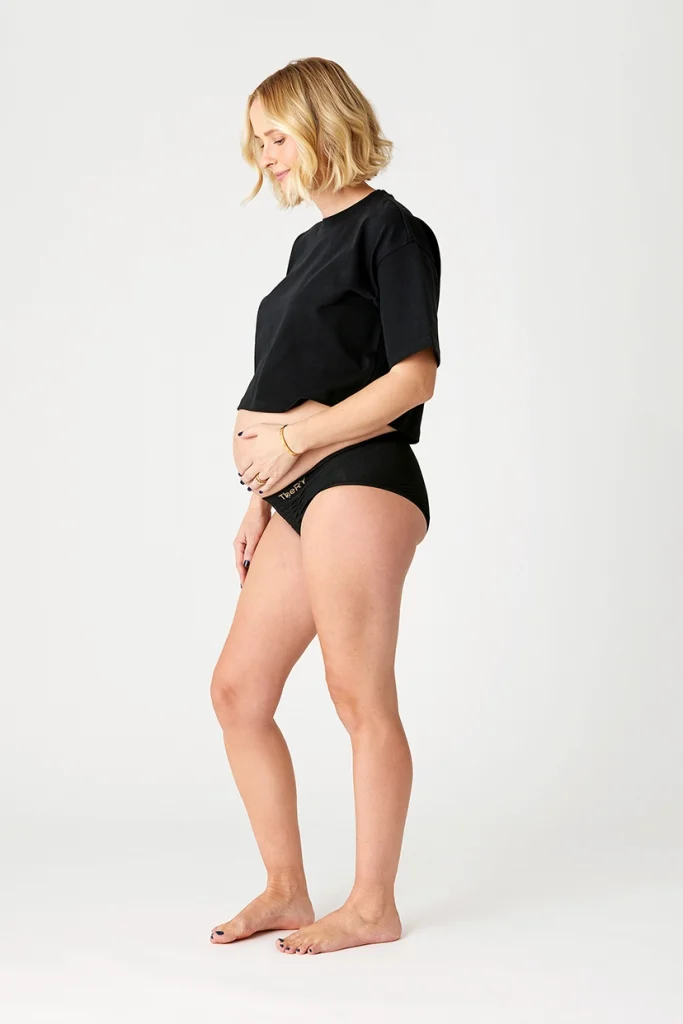
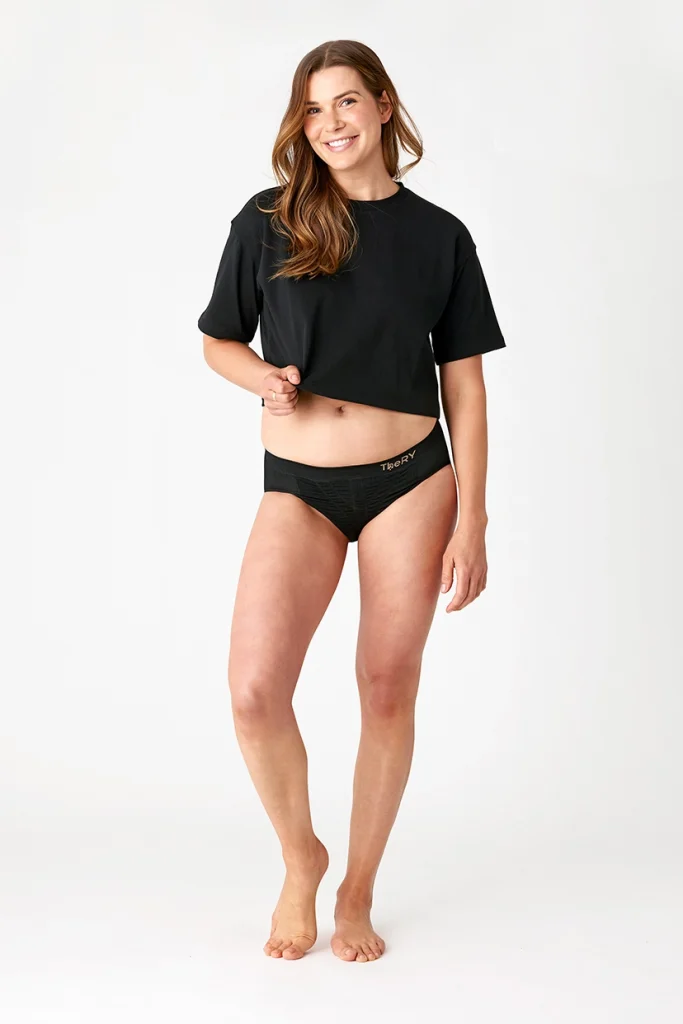
Designing lift without bulk posed notable challenges. TheRY leveraged ultra-fine high-tensile yarns and cutting-edge knit techniques to embed invisible support zones that remain flat under clothing. Clinicians and physiotherapists tested prototypes on themselves and patients, offering anatomical feedback at every step.
Key partners in validating the design included physiotherapists Rosie Purdue and Isabella Lees-Trinca, along with advisory networks of clinicians and midwives across Australia and the U.S. These professionals tested prototypes, assessed efficacy, and guided iterative refinement, from lift direction, compression levels, structural placement, to user comfort.
By focusing first on prolapse heaviness and vulvar varicosities, TheRY addressed symptoms that many feel intensely but rarely see catered. From there, they calibrated the design to deliver gentle support for symphyseal pubis dysfunction (SPD) and light stress incontinence, expanding the brief’s utility without detracting from its core mission: discreet, real support.
In early user testing, more than 80% of women reported a noticeable reduction in pelvic heaviness within the first day of wear. Clinician observations included improved comfort during walking or standing, extended periods on feet with less fatigue, and greater confidence managing symptoms outside clinical settings.
When correctly fitted, the brief should feel softly supportive, with a gentle upward lift. If it pinches at the leg openings, it may be too tight. If you can’t discern any lift, it may be too loose. TheRY currently offers sizes XS–XL, with plans to expand. A good rule: measure carefully and recheck during major body changes (e.g. pregnancy progression).
Life Stages & Use
- Pregnancy: Most women begin wearing from the second trimester onward when pelvic symptoms emerge. Many retain one size, but re-measure as your body changes.
- Postpartum: It is typically appropriate to begin wearing once comfort returns, often in the early weeks postpartum. Over time, it quietly supports while physiotherapy builds long-term strength.
- Perimenopause and Beyond: Pelvic changes don’t disappear with age. Many women find continued relief during hormonal transitions or periods of strain.
The brief supports movement: walking, Pilates, yoga, daily activity are well within its design scope. For high-impact exercise (e.g. running, heavy lifting), TheRY advises clearance from a clinician first.
It shines particularly in scenarios where pelvic heaviness or discomfort is magnified: long travel days, extended standing shifts, and return-to-work periods.
Relief is often immediate with many women feeling reduced heaviness as soon as they stand or walk in it. In other cases, comfort builds progressively over days of consistent wear.
TheRY encourages pairing the brief with pelvic floor physiotherapy for optimal outcomes. Think of the brief as external scaffolding for symptom relief, while clinical therapy strengthens the internal system. Together, they offer more durable improvement over time.
At a deeper level, TheRY wants to transform how pelvic health is spoken about, moving it from hush or shame into design, dialogue, and dignity. By creating a garment that’s discreet, beautiful, and functional, TheRY normalises pelvic health needs as part of everyday wellness.
As physiotherapist Rosie Purdue puts it:
“For someone who does have heaviness and dragging, it will help and it’s safe and relatively inexpensive. If you’re feeling less heavy, even going for a run can just make your day better.”